



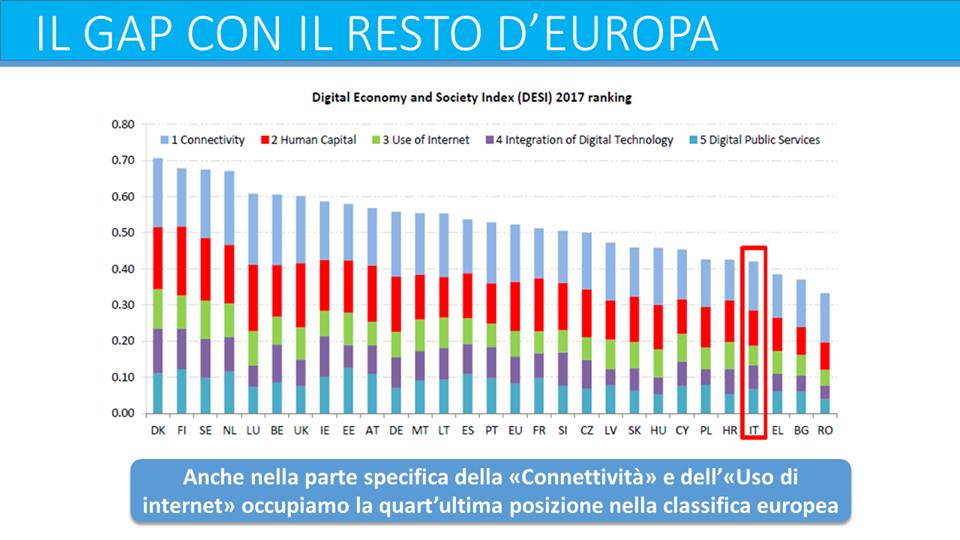
Italy ranks among the lowest positions for connectivity and Internet usage compared to other European countries. What are the causes and what can be done to catch up with the others? Assoprovider asks Maurizio Matteo Dècina, economist and great expert on Telecom affairs, author of the essay Goodbye Telecom.
What are the causes of the Italian gap compared to other countries?
«Le cause sono molte e di diversa natura. Innanzitutto, politiche: la privatizzazione di Telecom è stata fatta in modo troppo superficiale. Poi ci sono motivazioni normative: fin quando il codice civile permetterà artifici quali scatole cinesi, leverage buyout o governance privilegiate di minoranze azionarie, non si potrà mai avere all’interno delle grandi aziende piani di sviluppo a beneficio del Paese. E infine ci sono cause mediatiche e sociali: la larga banda da un lato è stata antagonista delle televisioni e dall’altra parte, per la grande diffusione della telefonia mobile, è stata sempre ritenuta di secondo piano. Finally, politics, apart from the very last few years, has done very little to change the picture."
In your studies, you analyze how Telecom's debts have delayed the development of the Network in Italy. What has emerged from your analyses?
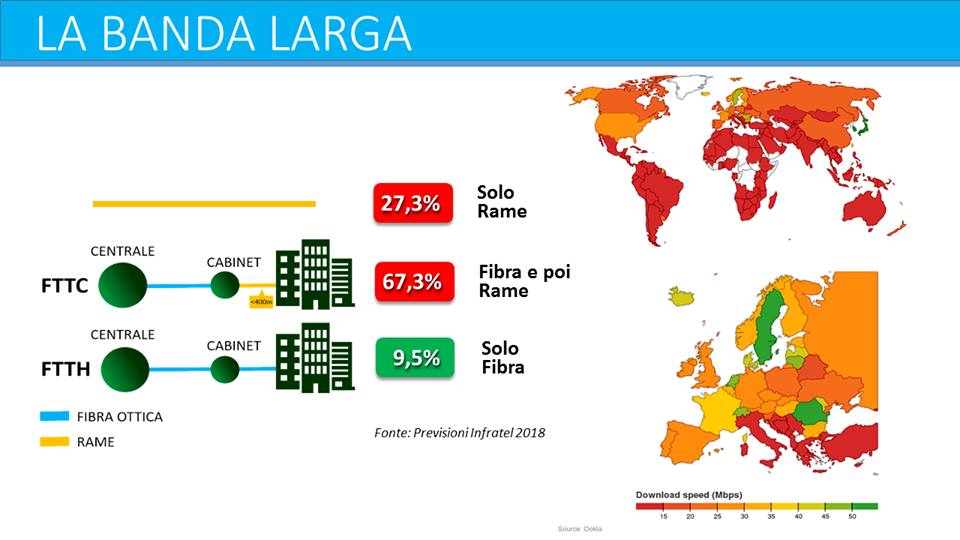
«Telecom Italia still has the 30 billion from various IPOs and mergers. Imagine now what would have happened if this amount had been invested entirely in broadband. Today, we would probably not have a network in FTTC, but rather two networks in FTTH with significantly different macroeconomic impacts on the country's system. We are talking about several percentage points of GDP.»
What are the benefits of an economy and policy that give space to small providers on GDP growth and employment?
«It is enough to conduct a statistical analysis on the role of small providers in other European countries. The numbers demonstrate that the more an economic system has competition, a high number of providers, legality, and bureaucratic regulations that facilitate business, the more the country has high bandwidth speeds functional to macroeconomic and social growth. The role of small providers is fundamental, especially with the 5G that will soon revolutionize the entire concept of the network. Through microcells, autonomous ecosystems will be created that can also be managed by small and very small providers oriented towards vertical market niches».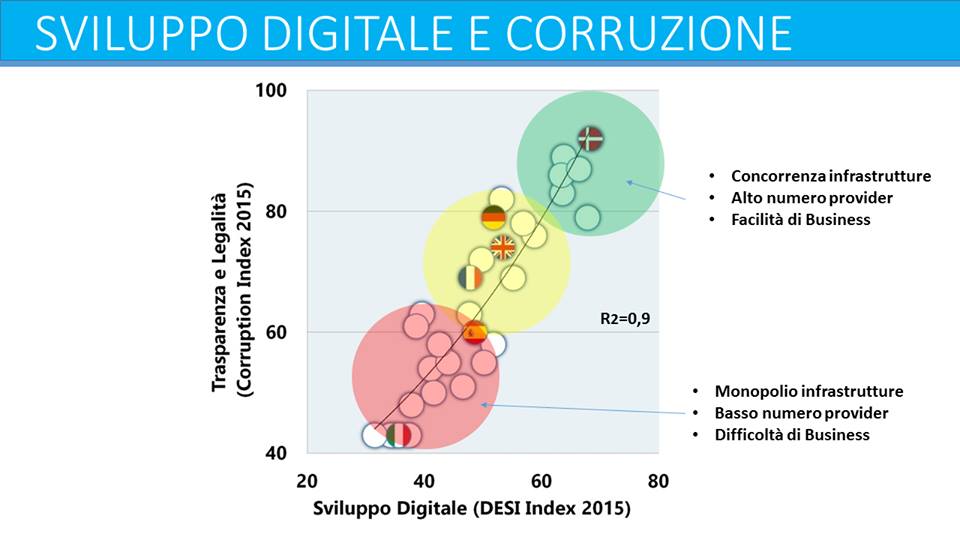
Three things you would do immediately to promote the development of the Network in Italy?
"Unbundle the Telecom network with the State's return in long-term development plans to create a wholesale network at advantageous prices for retailers and with a migration plan from copper to fiber." Favorire la concorrenza nell’ultimo miglio con una pluralità di soluzioni gestite da tanti provider locali, even small ones, that will create their own digital ecosystems. Promote, especially through regulations, the development of numerous solutions for social well-being such as telework, teleassistance, or telemedicine. All applications that require broadband and reduce the costs of traditional practices.
What can small providers do to have a greater impact on GDP and employment?
«Purtroppo l’associazionismo in Italia non ha mai avuto molto seguito. Chi ci ha provato ha sempre dovuto pagare le conseguenze di un sistema obsoleto che premia lo status quo, funzionale alle solite logiche speculative. Il problema però non è solo a monte, poiché la tradizione italiana è stata sempre caratterizzata da una bassa collaborazione politica e sociale in tutti i livelli. Faccio un esempio: i piccoli azionisti di Telecom dopo anni di lavoro incessante a beneficio del Paese non superano neanche l’1% del capitale di Telecom in un Paese dove ci sono circa 500.000 piccoli azionisti che potrebbero rappresentare oltre il 50% del capitale. Bisognerebbe iniziare con delle politiche che favoriscano l’aggregazione dei piccoli, anche con campagne mediatiche. Even if the media are quite moderate, to use an understatement. Let's see, it will be a good match. Ours is a country that shows its best in times of difficulty. However, the situation is gradually improving. It wouldn't surprise me if in 5-10 years we have caught up with the countries that are more advanced."