


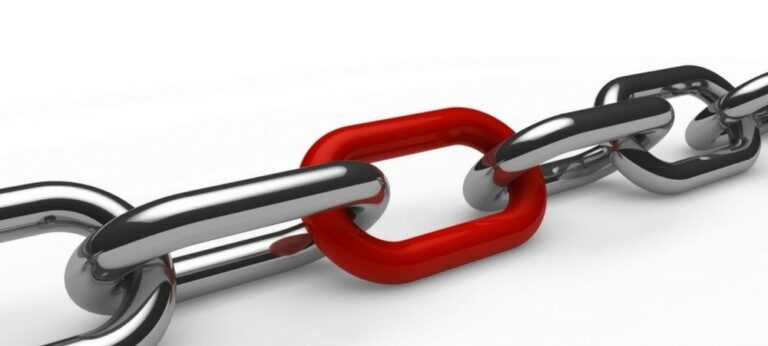
The second generation of the Internet is called blockchain, the technology that will bring trust to the Network, increasing security and data protection.
Blockchain is written, trust is read. The peer-to-peer network that underlies the functioning of bitcoin represents the future of digital technology for many. Why is it such a promising technology? We explain it in this post.
The second generation of the Internet
If the first generation of the Internet will go down in history as the Internet of Information, the second will be the Internet of Trust.
Trust is indeed the key word to understand what is blockchain and how it works: it is indeed a shared database, accessible to everyone, in which exchanges occurring on the web are recorded and cannot be modified. The technology eliminates intermediaries: users themselves can control and approve the transactions they are involved in, in real time.
How blockchain works
Blockchain, like bitcoin, originate from an idea by Satoshi Nakamoto, the pseudonym under which the inventor of cryptocurrencies is hidden. If digital currencies have proven to be subject to excessive volatility, the foundation on which they operate, namely the blockchain, has distinguished itself for its reliability.
To fully understand what blockchain is, one must imagine a large distributed database for managing transactions. This database is shared among multiple nodes of the Network and is structured in a way that consists of blocks of information linked together, the chain of blocks, precisely, from which the technology derives its name.
The "block" mechanism essentially allows for two things:
- The verification of transactions is entrusted to the Network nodes
- Each block becomes an immutable archive that cannot be modified without the approval of the other nodes in the Network.
What are the advantages of blockchain
There are many advantages to this technology. The first is certainly the reduction of costs for transactions that take place online. In fact, the role of the intermediary no longer exists, and everything happens automatically through software. The absence of an external control mechanism then speeds up transaction times.
Another advantage is related to the cybersecurity: it is possible to eliminate episodes of fraud and corruption. Blockchain indeed tracks and verifies all transactions, the ledger stores information on transfers from documents, financial transactions, to physical objects.
And again, transparency. The exchanges are visible to all participants, thus ensuring greater transparency in operations.
Blockchain fits every sector
Higher speed, security, and transparency of the Network. These three elements alone are enough to understand why blockchain is appealing to everyone. Transactions carried out through the blockchain are visible to all participants, thus ensuring transparency in operations. financial institutions that today spend enormous amounts to ensure transaction security (from 65 to 80 billion per year).
In this case, the introduction of a shared database that allows each party to check the status of transactions with a simple login would eliminate any mediation figures, saving banks a lot of money.
But not only that, blockchain lends itself to very diverse uses. In retail, for example, a producer in the agri-food sector could use it to manage all stages of the supply chain, while the consumer could use it to verify the origin of a product.
This technology could still become an asset for healthcare, facilitating, for example, the exchange of information between doctors and hospitals. Or in real estate to simplify and speed up property control operations. And also in innovative fields such as the Internet of Things, to make the data transfer from one smart object to another more secure.
Many challenges if…
Many are the challenges for blockchain, which will have a bright future if it can overcome the challenges ahead, such as proving it can be adopted by the masses and to improve and evolve the underlying technology. In this sense, new blockchains are already emerging that promise better performance in terms of speed and energy consumption.